
Below you will find details on how to Design Your Table:
Click link here for 'Creating the Tabletop'
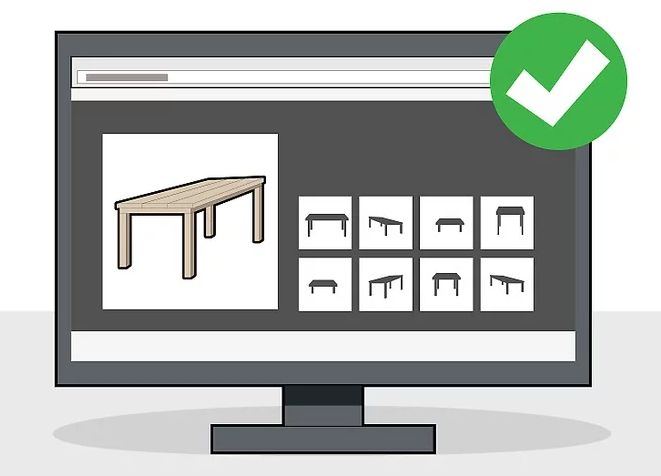
1. View pictures of tables to figure out what kind of table to make. There are a lot of different types of tables in the world, so take some time to consider you want. Go online and look up images of tables, noting the style of each one. Also, get ideas from furniture catalogues and woodworking magazines.
-
- Base your choice on your needs, such as what you want to use the table for and how much space you have available for it.
- For instance, you may desire a large, rustic kitchen table. You might also make a short coffee table or an elegant bedroom end table.
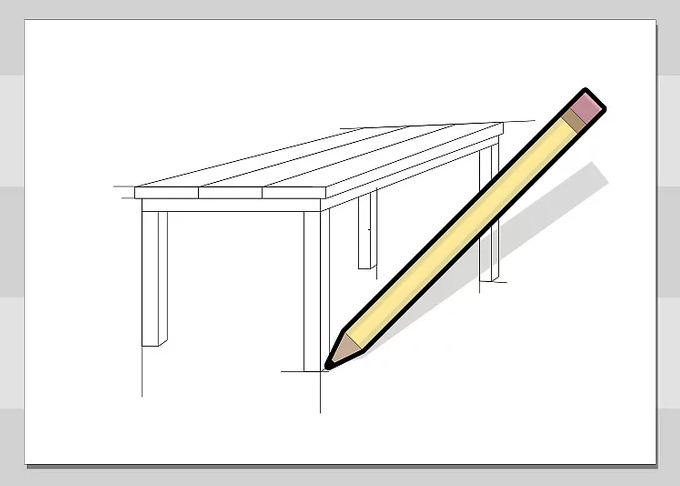
2. Sketch out a rough design of your table on paper. Use a pencil and a ruler to create your ideal table. Don’t worry about the dimensions at first. Instead, think about how you want the finished table to look. Select what features you want, then settle on a size.
-
- Once you have a rough design, pencil in the dimensions. Keep in mind that lumber sizes listed at stores are 1⁄2 in (1.3 cm) smaller than the actual lumber, so add an extra 1⁄2 in (1.3 cm) to all of your estimates.
- Your dimensions will vary depending on the kind of table you construct. A dining table has different dimensions than a bedside table.
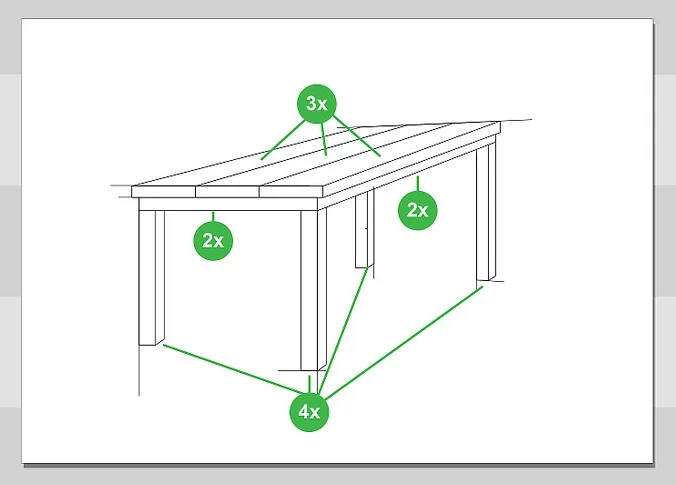
3. Estimate how much wood you will need. Break your table down into its basic components. The simplest table has a tabletop and legs connected by apron pieces. If you plan on adding extra features to your table, you will need to get lumber for those sections as well.[1]
-
- For example, try making a table with 3 2 in × 12 in (5.1 cm × 30.5 cm) tabletop boards cut 61 in (150 cm) long, 4 4 in × 4 in (10 cm × 10 cm) legs cut 28 1⁄2 in (72 cm) long, 2 2 in × 4 in (5.1 cm × 10.2 cm) apron boards cut 18 3⁄4 in (48 cm) long, and 2 2 in × 12 in (5.1 cm × 30.5 cm) more apron boards cut 49 in (120 cm) long.
- Get extra lumber or wood for any additional features you add to your table. For instance, you can add rails for extra stability or add boards to extend the tabletop.
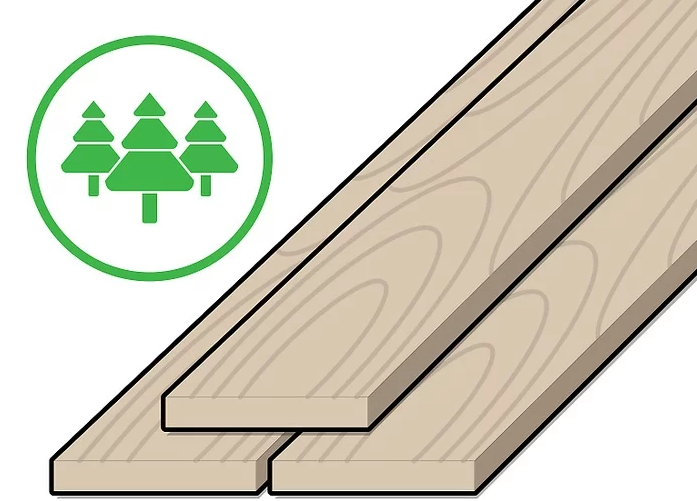
4. Select an inexpensive but sturdy wood such as pine for a lasting table. Pine isn’t the toughest wood, but it is a beginner-friendly choice. You can still use it to create tables that last decades. Some common hardwoods, including maple and cherry, are also suitable choices for sturdy tables.
-
- Look for other inexpensive types of wood. Construction-grade douglas fir can be used to make tables. Woods like poplar make for good furniture but are tougher to stain properly.
- For outdoor projects, choose redwood, cypress, or a treated wood like pressure-treated pine.
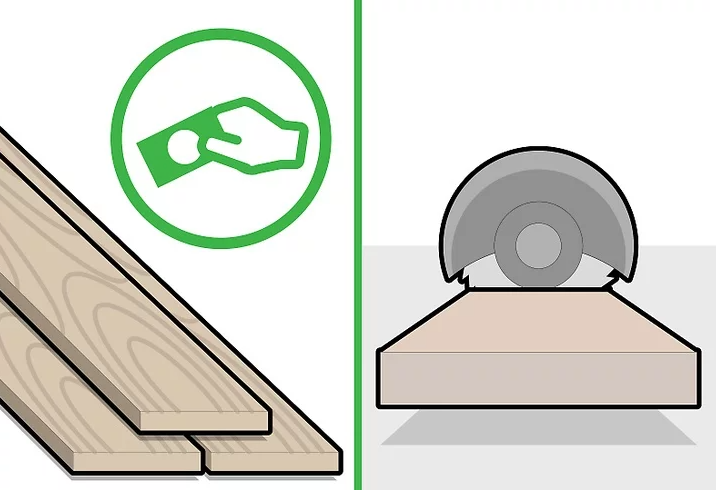
5. Purchase the wood and and have it cut. Once you know what you need, visit a home improvement store to purchase it. Most stores will cut the wood for you, so ask them to take care of it. Save yourself some work so you can begin constructing the table right away.
-
- You can cut the wood yourself if you have a workbench, some clamps, and a circular saw or handsaw. Always wear polycarbonate safety glasses and a respirator mask when operating a saw.
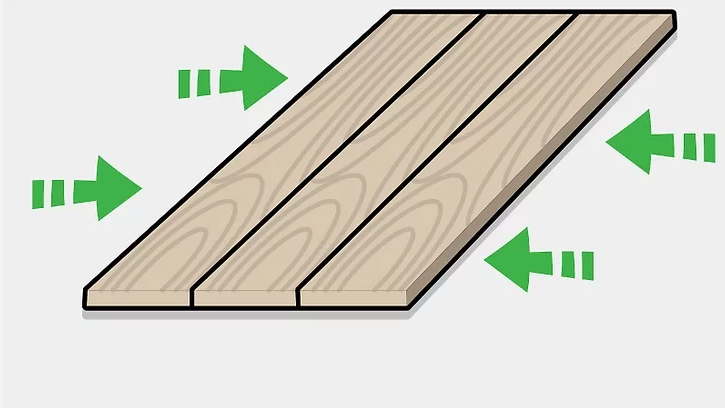
Creating the Tabletop Please see here
Comments
0 comments
Please sign in to leave a comment.